
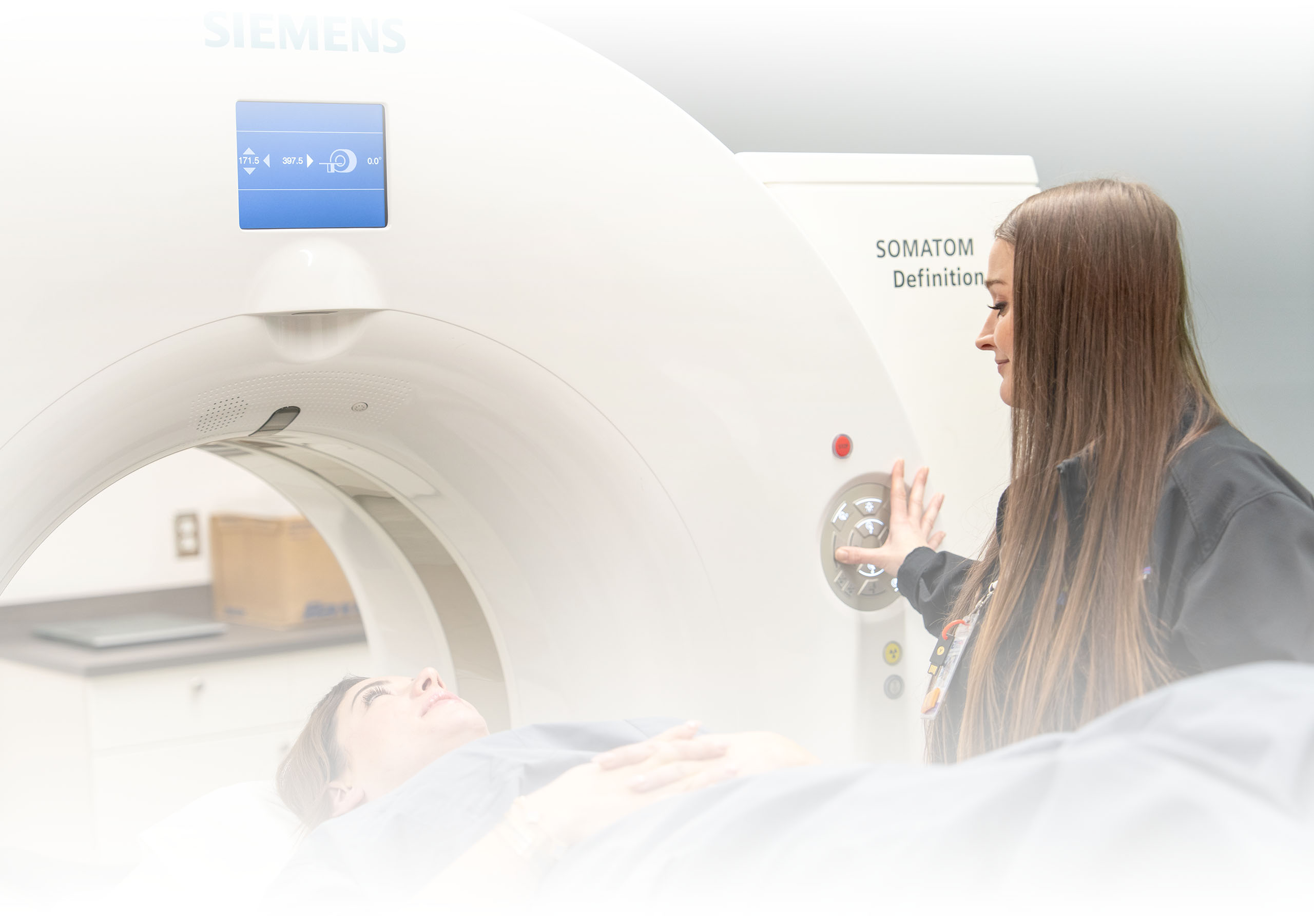
Fast, Detailed Views of the Body.
Low-dose 128-slice CT technology delivers clearer images in less time, helping reduce repeat scans and radiation exposure.
Our CT Benefits



CT Bone Density
CT bone density (QCT) is an extremely accurate way to diagnose osteoporosis and assess fracture risk using CT-based measurements.
- Extremely Accurate Osteoporosis Assessment
- Tracks Bone Density Over Time
A CT bone density exam may be helpful for:
- Osteoporosis screening
- Postmenopausal women
- Those with a history of fractures or long-term steroid medication use
- Precise bone measurements for diagnosis or treatment
Your provider can help determine whether CT-based bone density measurement is appropriate for you and how it should be used to assess or monitor bone health over time.
CT Calcium Scoring
CT calcium scoring is a quick, non-invasive CT exam that measures calcified plaque in the coronary arteries to help assess your risk for heart disease.
- Measures Coronary Artery Plaque
- Non-Invasive Heart Risk Screening
A CT calcium scoring scan may be helpful for people with risk factors for heart disease, such as family history, high cholesterol, high blood pressure, or diabetes – especially when symptoms are not yet present.
Your provider can help determine whether CT calcium scoring is appropriate based on your individual risk factors and health history.
Clinical Capabilities
A 78cm gantry and expanded coverage area support improved positioning and consistent image quality, helping reduce repeat scans.
iMAR metal artifact reduction improves visualization in patients with implants, joint replacements, or pacemakers.
A Great Image is Only Part of the Story
Insurance
In-Network Preferred Providers
Aetna
Alaska Breast and Cervical Program (formerly known as Ladies First)
Anchorage Project Access
Blue Cross Federal Employee Program
Beechstreet
Blue Cross Blue Shield / Premera
Cigna
EBMS
First Choice Health
GEHA
Meritain
Medicaid
Medicare
Moda
Multiplan
Providence Health Plans
Tricare
TriWest Healthcare Alliance
United Healthcare
VA
Workers Compensation
FAQ
What should I expect during a CT scan?
A CT scan is quick and painless. We help position you comfortably, and most scans take just a few minutes once imaging begins.
Is CT safe?
CT uses X-rays, but our 128-slice scanners and optimized protocols are designed to deliver high-quality images while keeping radiation exposure as low as possible.
Will I need contrast?
Some CT exams use contrast to improve detail. If contrast is recommended, we will review your history and explain what to expect before your exam.
How long will my appointment take?
Most CT appointments take 15–45 minutes total, including check-in and positioning. The scan itself is usually completed in seconds.
Can I return to normal activities afterward?
Yes. Most people can return to normal activities right away. If contrast is used, we recommend drinking extra fluids afterward.
When will my results be available?
CT exams are interpreted by subspecialized radiologists from Alaska Radiology Associates. Results are typically available quickly and sent directly to your provider.
What if I have implants, joint replacements, or medical devices?
Our CT technology includes metal artifact reduction features that help improve image quality in patients with implants, joint replacements, or pacemakers.
Do I need to prepare for my CT scan?
Preparation depends on the type of CT exam. Our team will give you clear instructions ahead of time if any prep is needed.
Who can I talk to if I have questions before my exam?
Our Guest Services team is happy to help. Call (907) 222-4624 with any questions about scheduling, preparation, or insurance.