
Measuring Bone Strength Over Time.
Our DEXA scans provide precise bone density measurements used to assess fracture risk and guide treatment decisions, with reliable long-term tracking.
DEXA (DXA) is the standard test for measuring bone mineral density, diagnosing osteoporosis, and assessing fracture risk. Scans are quick, noninvasive, and use very low doses of radiation.
Our DEXA Benefits





Bone Densitometry Test
A Bone Densitometry Test is performed using a DEXA scan and measures bone mineral density. It helps determine how strong your bones are and whether they’re at risk for fractures.
- Extremely Low Dose of Radiation
- Accurate Bone Assessment
A DEXA scan may be helpful to people who have experienced a bone fracture or at risk of developing osteoporosis. Osteoporosis often presents no symptoms, but risk rises with age, gender, family history, body type, certain conditions or medications, and lifestyle factors like smoking or alcohol.
Your provider can determine whether a DEXA scan may be appropriate based on your history.

Instant Vertebral Assessment Scans (IVA)
Clinical Capabilities
A Great Image is Only Part of the Story
Insurance
In-Network Preferred Providers
Aetna
Alaska Breast and Cervical Program (formerly known as Ladies First)
Anchorage Project Access
Blue Cross Federal Employee Program
Beechstreet
Blue Cross Blue Shield / Premera
Cigna
EBMS
First Choice Health
GEHA
Meritain
Medicaid
Medicare
Moda
Multiplan
Providence Health Plans
Tricare
TriWest Healthcare Alliance
United Healthcare
VA
Workers Compensation
FAQ
What should I expect during a DEXA scan?
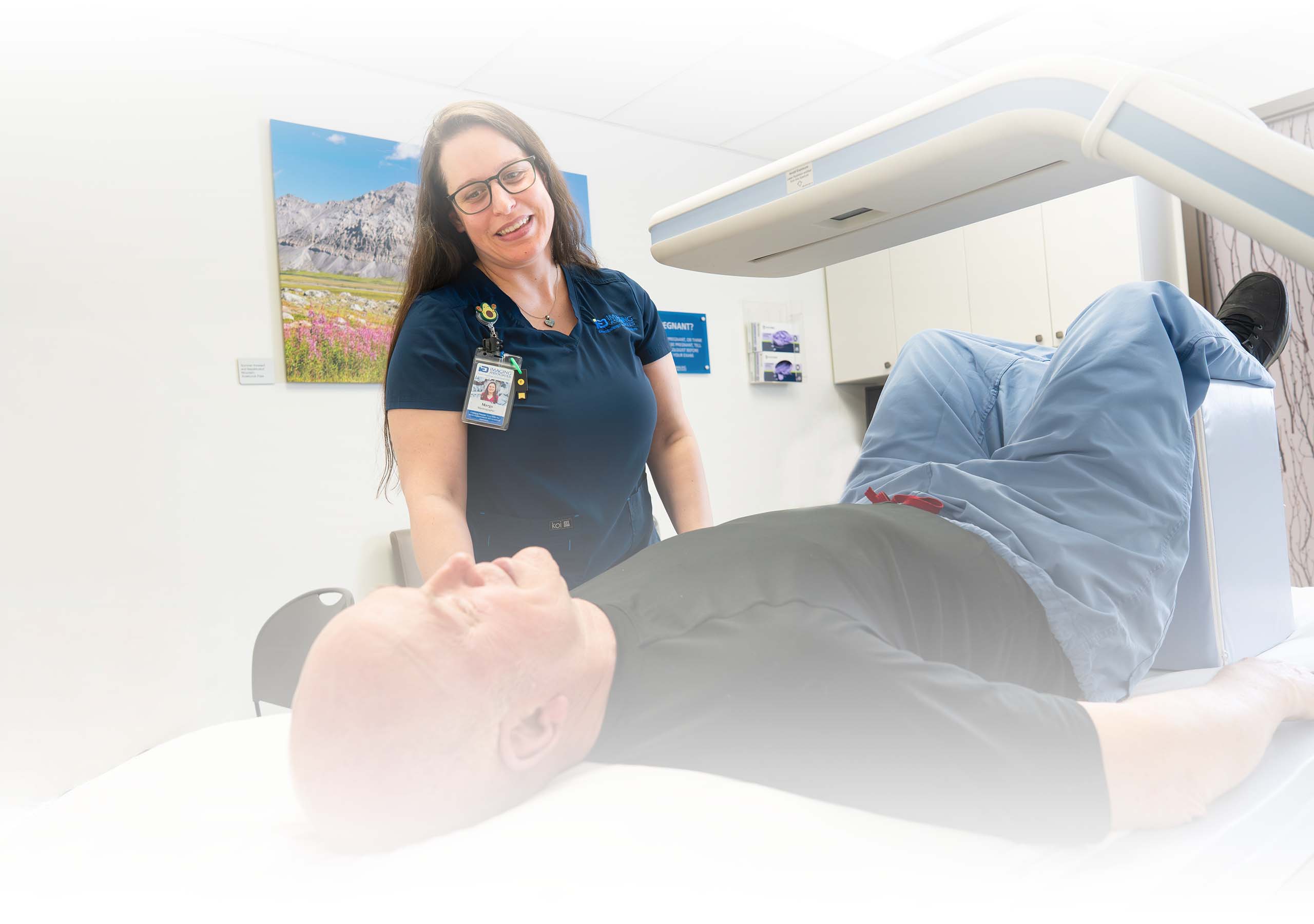
A DEXA scan is quick, comfortable, and noninvasive. You will lay down on your back on a padded table while we take the images. Most scans are done in about 15 minutes.
Is a DEXA scan safe?
Yes. DEXA uses a very low dose of radiation—significantly less than most X-ray exams—and is considered safe for routine monitoring over time.
Do I need to prepare for my DEXA scan?
Preparation is minimal. You should avoid calcium supplements for 24 hours before your exam. Wear comfortable clothing without metal on them. If you have had an exam with contrast within the past week, please let us know so that we can make sure we schedule you appropriately.
Will I need contrast or injections?
No. DEXA scans do not require contrast, injections, or IVs.
What areas of the body are scanned?
Most DEXA scans image the left hip and lower back. Depending on your clinical indications, we may scan your right hip and/or forearm. Instant Vertebral Assessments include scanning while you lie on your right side and imaging the spine. Body Mass Index scans image the whole body in sections.
What is an Instant Vertebral Assessment (IVA)?
An IVA scan uses imaging to check for height loss in the vertebrae relating to compression fractures, often related to osteoporosis or other bone conditions.
Can a DEXA scan measure body fat and muscle?
Yes. Body Mass Index scans can measure body composition, including fat mass and lean muscle mass.
How often should DEXA scans be repeated?
Your provider will recommend timing based on your risk factors and personal history.
When will my results be available?
DEXA scans are interpreted by fellowship-trained radiologists from Alaska Radiology Associates. Results are sent directly to your provider, often within a short timeframe. Body Mass Index scan results are given to you at the time of your appointment to take and discuss with your provider. There is no radiologist report made on these exams.
Can I return to normal activities after my scan?
Yes. There are no restrictions after a DEXA scan, and you can resume normal activities immediately.
Who can I talk to if I have questions before my appointment?
Our Guest Services team is happy to help with scheduling, preparation, or insurance questions. Call (907) 222-4624.